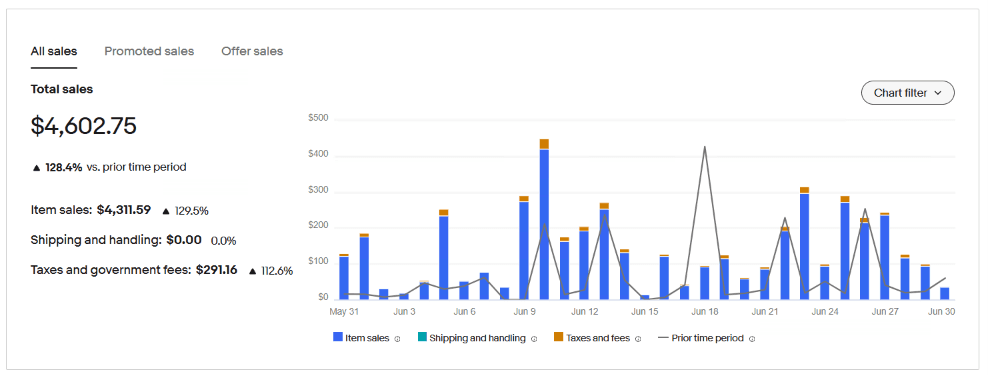
High Sale Sourcing & Research
Advanced product research strategies filtering and importing high-conversion dropship items to scale sales.
The Ultimate eBay Product Research Showdown: Winning with Data, Not "Vibe Checks"
We’ve all been there: you spot a product, your gut says “this is going to sell out instantly,” you create a beautiful listing, and then... absolute crickets.
In the modern e-commerce landscape, listing products based on a vibe is a one-way ticket to wasted listing fees. To build a highly profitable eBay store, your decisions need to be ruthlessly backed by data.
But which product research tool actually gives you the edge? Today, we are breaking down the ideal eBay product research workflow and stacking the industry's top three heavyweights—Terapeak, ZIK Analytics, and AutoDS—side-by-side so you can choose the right weapon for your business.
📊 The Big Three: How They Compare at a Glance
Choosing a tool depends entirely on your business model. If you are a traditional private-label or thrifting reseller, you need historical sales. If you're a dropshipper, you need real-time competitive spy tools.
Here is how the top software stacks up:
| Feature | eBay Terapeak (Native) | ZIK Analytics | AutoDS Product Hub | | :--- | :--- | :--- | :--- | | Best For | Every everyday eBay seller | Competitor sniping & market trends | Automated dropshipping validation | | Data Source | Direct eBay Seller Hub | Live eBay API + Multi-marketplace | Scraped supplier & marketplace data | | Historical Range | Up to 3 Full Years | Focuses on recent 7/14/30 days | Dynamic/Real-time | | Cost | Free (With Basic Store or higher) | Starts at ~$39/mo | Starts at ~$26/mo | | Competitor Stalking | Minimal/Basic | Highly Advanced (1-scan) | Tailored to supplier-matching |
🔍 Deep Dive: Which Tool Fits Your Sourcing Style?
1. eBay Terapeak: The Historical Truth-Teller
Because Terapeak is baked directly into eBay’s official Seller Hub, it holds a massive advantage: it doesn't rely on estimated data. It shows you exact, unvarnished transaction history up to 3 years back—including the actual hidden prices accepted via the "Best Offer" feature.
- The Superpower: Flawless for spotting seasonality and calculating the exact average shipping costs buyers expect.
- The Catch: It lacks deep competitor cross-analysis. It won't tell you how much money a specific rival store made this week or what suppliers they are hiding.
2. ZIK Analytics: The Ultimate Competitor Sniper
ZIK Analytics doesn’t care just about the item; it cares about who is selling it. It is widely regarded as the sharpest tool for discovering "winning" items by legally spying on high-performing sellers.
- The Superpower: The Turbo Scanner and 1-click competitor store analysis. You type in a competitor's username, and ZIK instantly tears open their store to reveal their total revenue, sell-through rate, and exact top-selling items over the last 30 days.
- The Catch: It carries a monthly subscription fee, and the interface can feel overwhelming with data charts for absolute beginners.
3. AutoDS: The All-in-One Automation Machine
AutoDS is less about deep historical data analysis and more about rapid-fire execution. It features a "Winning Products" hub designed specifically to bridge the gap between sourcing and listing.
- The Superpower: Speed. Once the tool identifies a high-demand item, you can import it to your eBay store, set pricing guardrails, and track supplier inventory changes in just a click.
- The Catch: If you are a traditional "buy-and-hold" inventory seller, 80% of AutoDS’s automation and supplier-monitoring features will be useless to you.
🛠️ The Ideal Product Research Checklist
Regardless of the platform you choose, an ideal product research workflow follows a strict validation process before you spend a single penny on inventory:
1. Check the Sell-Through Rate (Goal: >50% in 30 days)
Search the target keyword. You want to see that at least half of the active listings for this item are successfully converting into completed sales every month. Low sell-through means the market is entirely oversaturated.
2. Analyze the Price Floor & Ceiling
Calculate your margins. Look at the average sold price, not the current active listing prices. Filter out the absolute lowest outlier (usually low-quality cross-border sellers) to find a realistic price your listing can command.
3. Scan for Competitor Saturation
Check the top 5 sellers. Are the top sales concentrated entirely in the hands of one mega-seller? If so, look for a sub-niche or varied keyword strategy. If sales are spread out across multiple medium-sized sellers, the door is open for you.
4. Run a Risky Keyword Check
Safety First. Ensure the brand name isn't flagged under eBay’s VeRO (Verified Rights Owner) program. Listing a Vero-protected brand without authorization can get your seller account restricted overnight.
💡 The Final Verdict:
If you are just starting out or working with zero budget, stick to Terapeak—the free data inside your Seller Hub is incredibly powerful. If you want to actively reverse-engineer what successful stores are doing to steal their market share, invest in ZIK Analytics.
Explore more projects
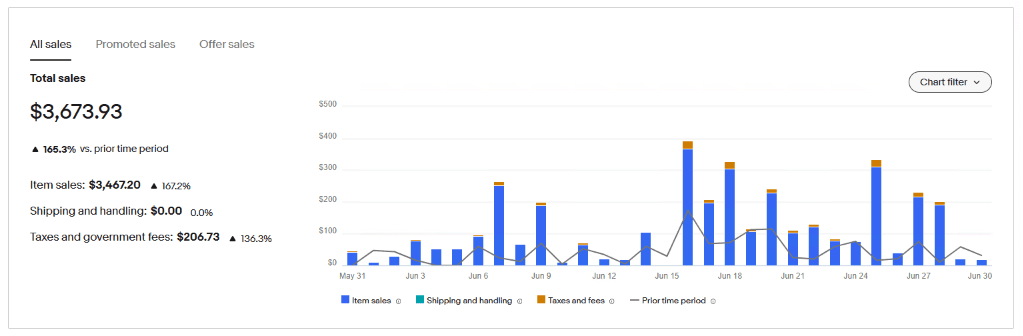
Store sales volume and monthly performance data proving high profit returns and active customer scaling.
Integrated backend pipelines handling stock sync, tracking numbers, and profit metrics across eBay and Amazon.
High volume orders and daily conversion metrics highlighting massive sales growth through automated systems.